Wellness has become a category — a glossy industry of spa hotels, retreat resorts and influencer-led week-aways. Some of it is lovely. Most of it is a holiday with a yoga class taped on. A healing retreat is something else, and after thirty years of holding retreats at Danu Lodge it is worth saying clearly what makes one different.
The land does the first half of the work
A healing retreat sits on land that holds it. Not landscaped grounds and a heated pool — actual land, with old trees, a water source, and the felt presence of the people and creatures who came before. Tober Patrick, the sacred well a short walk from Danu Lodge, has been a healing site for centuries. The native woodland around it, the slow sky over north Wexford, the quality of silence at 4am — these are the medicine. The building is the shelter.
The lineage of the work matters
When the work being offered comes through a real lineage — Grof® Breathwork through the Grof Legacy Training school, Celtic Shamanism through Caitlin and John Matthews, Classical Acupuncture through Jeffrey Yuan, sweat lodge through thirty years of Lakota and Celtic practice — the practitioner is held by something larger than themselves. The work has been tested across generations. That depth is felt by the body well before it is understood by the mind.
Be wary of retreats where the modality has no traceable teacher, no professional body, no elders. Wellness without lineage is often improvisation in good clothes.
Small numbers, real attention
A healing retreat keeps numbers small enough that the team genuinely knows each guest. At Danu Lodge that often means three to eight people in residence at once. The cook knows what you cannot eat. The facilitator knows what came up in your morning meditation. The land has space to hold you. Mass-market retreats with thirty or fifty guests can be lovely social events; they cannot offer that depth of held space.
Ceremony, not just programme
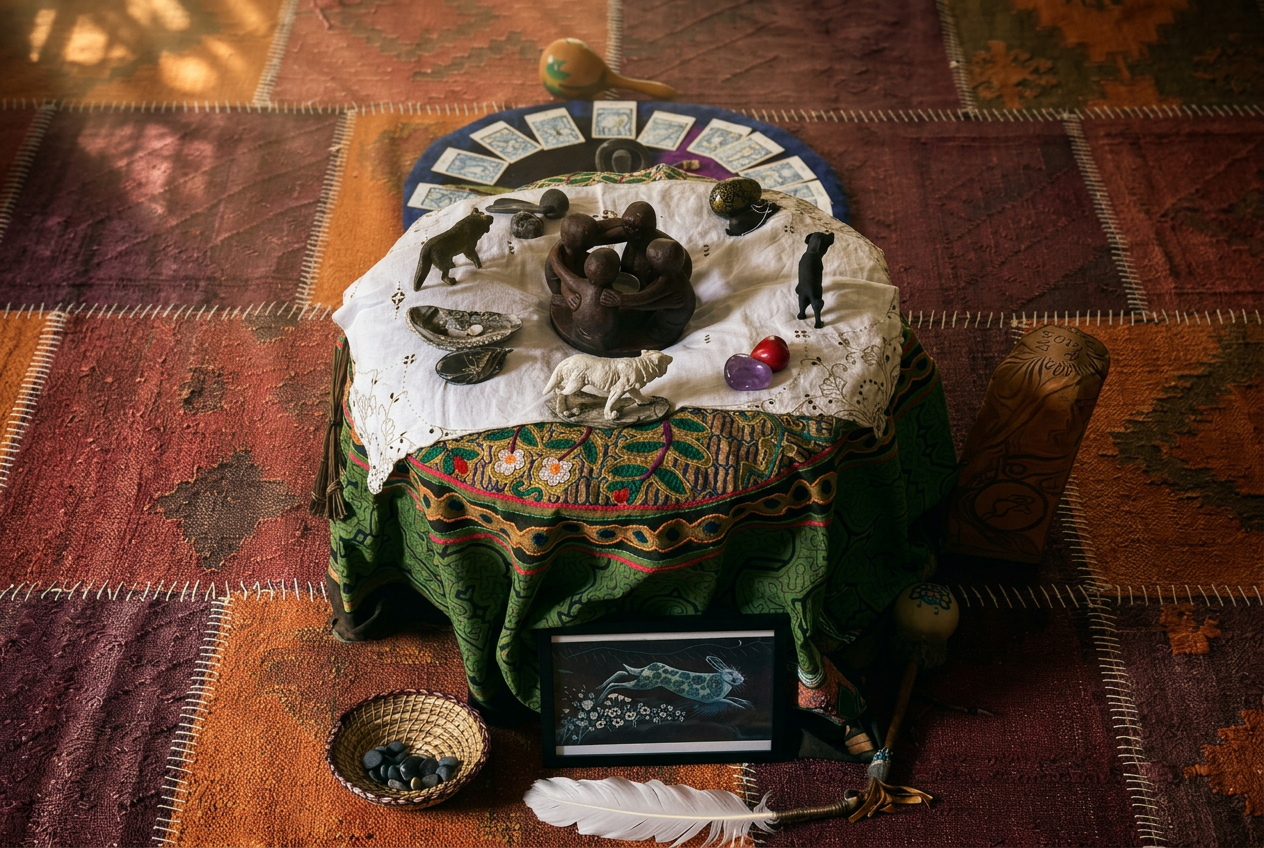
There is a difference between a timetable and a rhythm. A programme is a list of activities. A rhythm is a held container — opening, deepening, integrating, closing — that mirrors the shape of the inner work. A real healing retreat usually has at least one moment of ceremony: a sweat lodge, a breathwork journey, a circle, a quiet welcome and a quiet ending. The ceremony is the trellis the inner work climbs.
Slow food, slow time, slow company
Food cooked from the garden, eaten unhurriedly, in the company of others doing the same work. Time that is not measured in tasks. Conversation that does not have to perform anything. These sound small, but they are the conditions under which the nervous system finally settles enough for the deeper work to surface. A retreat that feels rushed is no retreat.
The integration is part of the offering
A healing retreat does not end at checkout. The team stays in light contact in the weeks after — a follow-up email, an open invitation to call, a reduced rate on a return stay if integration becomes hard. Healing is a long arc. A retreat that disappears the moment you leave is incomplete.
How to tell the difference before you book
Look for: small group sizes, named facilitators with traceable lineage, a real address rather than a venue rented for the week, clear pricing without upsells, and a willingness to have a real conversation before you commit. A deeply healing retreat is held by people who would rather you did not come than have you come at the wrong moment.
If a retreat answers all those questions warmly and slowly — book it.