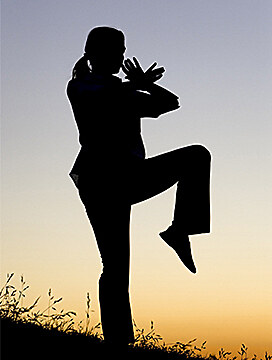
Qigong literally means energy work. It is the foundation of every Oriental martial art — including Kung Fu and the more refined form of Taichi — and the practical art of cultivating and directing the life force, qi, through breath, movement and intention. Taichi means yin-yang, the balance of all things; its slow, smooth movements are an applied form of Qigong.
Why the lower energy centres matter
In Daoist anatomy, the lower abdomen — the lower dantian, sitting just below the navel — is the body's reservoir of vitality and creative energy. It is the home of jing (essence), the deep current that fuels reproduction, growth and longevity. When this centre is full and flowing freely, sexual vitality, creative life and physical resilience all flourish; when it is depleted by stress, overwork, illness or grief, every other system feels it.
A simple home practice
Stand with feet shoulder-width apart, knees soft, spine long, crown lifted as if a thread runs from the top of the head into the sky. Let the hands rest gently on the lower belly. Breathe slowly into the belly, feeling it expand under your hands; exhale and feel the belly soften. Begin with five minutes and build to twenty. This is the foundation; longevity Qigong sets like the Marriage of Heaven and Earth (taught in our workshops) build on it to open the upper and lower body and free the energy of the internal organs.
Building a practice
Qigong rewards little and often more than long once-a-week sessions. Ten daily minutes will do more than a single ninety-minute class. Classes and one-day workshops are held at the lodge year-round — see the events page for the next gathering — and one-to-one tuition is available for those wanting to deepen the practice.